Efficient Living: The Role of Multifunctional Furniture in Home Organization
As urban areas continue to grow and populations swell, American homes are feeling the crunch. The trend indicates that new apartments are shrinking, with the average size plummeting by nearly 8% over the past decade. This transformation in housing has prompted individuals and families to reassess how they utilize every square foot of their residences, leading to innovative solutions that can make small living spaces functional and stylish.
Multifunctional furniture stands out in this evolving landscape. It offers more than just aesthetic appeal—it’s a vital strategy for addressing real spatial constraints faced by many households, especially in bustling cities. The rise in housing costs and urban living has significantly influenced consumer preferences, steering them toward adaptable furniture that maximizes their environments without sacrificing comfort.
Why Dual-Purpose Design Matters
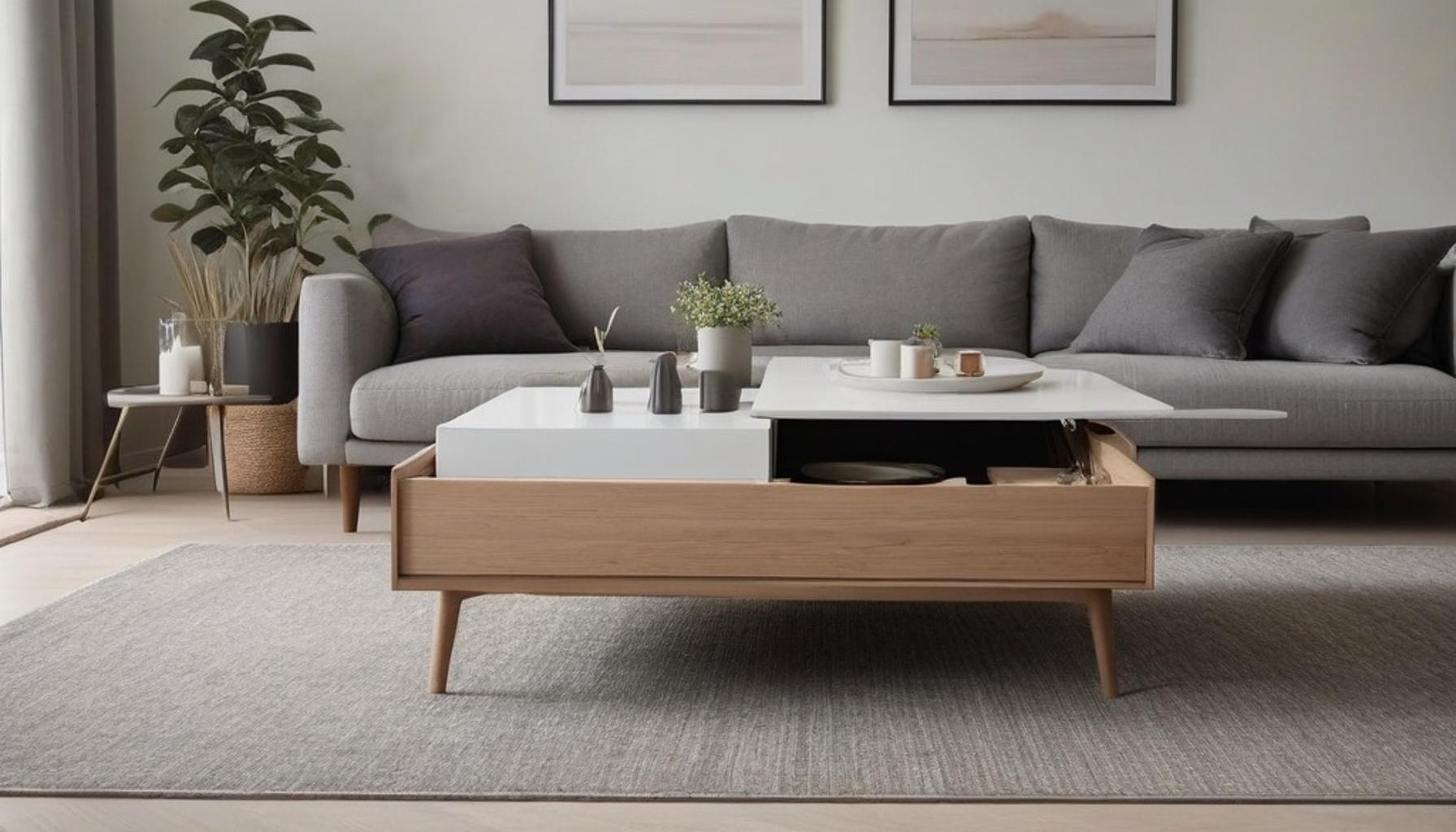
The importance of dual-purpose design cannot be overstated. Imagine a sofa bed that seamlessly transitions from a cozy living room setting to an inviting guest suite, ready to accommodate visitors at a moment’s notice. Or consider the versatility of a coffee table that lifts up and transforms into a workspace, catering to the needs of remote employees balancing productivity with comfort as they sip their morning coffee and dive into tasks.
These dual-purpose designs are not merely creative novelties; they are space-saving furniture options that tackle very real issues faced by many:
- With studio apartments in cities like New York and San Francisco averaging under 500 square feet, maximizing space becomes essential.
- The demand for flexible home offices has skyrocketed post-pandemic as more individuals choose to work remotely, requiring functional work-from-home setups.
- There is a rising interest in minimalist, clutter-free living that encourages thoughtful consumption and innovative uses of space.
What This Article Covers
This article takes a deep dive into how dual-purpose furniture is transforming American interiors. From ottomans that cleverly conceal storage to Murphy beds that disappear into walls, we’ll explore a range of practical, budget-friendly options that enhance living conditions without compromising design.
Readers will uncover actionable home organization tips that cater to various lifestyles, real product examples that feature in Modern Living magazines, and efficient living solutions tailored for snug apartments, tiny homes, and even suburban houses. It’s all about making every square inch count while ensuring that your home remains inviting and stylish.
We invite you to discover how innovative designs can elevate your living experience, combining functionality with elegance, helping you navigate the challenges of reduced living space in a modern world.
DISCOVER MORE: Click here to dive deeper
Walk into any furniture showroom in Brooklyn, Austin, or Chicago today, and you’ll notice something different from a decade ago. Sofas fold into beds. Benches swallow entire wardrobes. Tables shrink and expand like accordions. This is the new language of multifunctional furniture, and it’s rewriting the rules of how Americans furnish their homes.
According to a 2023 report from the National Association of Home Builders, the median size of newly built apartments dropped to just 941 square feet. That’s roughly the footprint of a modest two-car garage—now expected to house a living room, bedroom, kitchen, and often a home office. The math simply doesn’t work with traditional furniture. As living spaces shrink, the demand for furniture that can adapt and transform has surged, leading to an innovative evolution in design.
The Mechanics Behind the Magic
So how does dual-purpose furniture actually solve this puzzle? It comes down to three core mechanisms that designers rely on repeatedly:
- Transformation — Pieces that physically change shape or function, like a wall-mounted desk that folds down for work and can be tucked away when the day ends. These clever designs not only create more space but also enhance functionality. For example, the Murphy bed, once a retro relic, has seen a renaissance with modern materials and aesthetics, seamlessly blending into the decor.
- Concealment — Furniture that hides storage in plain sight, such as a bed frame with built-in drawers or a bench that opens to reveal shoe storage. This mechanism is crucial in apartments where floor space is at a premium; indeed, many items, like ottomans or coffee tables, now come with hidden storage capabilities to help keep clutter away and maintain a clean, streamlined appearance.
- Stacking utility — Items designed to serve multiple functions simultaneously, like a nesting coffee table that doubles as extra seating during game night or side tables that can be used as nightstands. This versatility allows for dynamic use of space, transforming a room to suit different needs—be it a quiet reading nook or a bustling gathering space.
These aren’t gimmicks—rather, they’re engineered responses to a housing market where every square foot carries a price tag. In cities like San Francisco, where the median rent for a one-bedroom apartment hovers around $3,000 a month, homeowners and renters alike are calculating cost-per-square-foot in ways previous generations never had to. With housing prices continuing to soar, investing in furniture that provides maximum functionality has become a savvy financial decision.
A Shift in Consumer Mindset
What’s particularly interesting is how attitudes toward ownership have shifted alongside this furniture evolution. Millennials and Gen Z consumers, who comprise a growing share of furniture buyers, consistently rank flexibility and adaptability above brand prestige, according to a 2022 Furniture Today industry survey. This newfound emphasis on versatility is changing not only what furniture is made but also how it is marketed.
This generational shift has fueled demand for space-saving furniture that doesn’t just fit into small apartments but actively supports a more intentional lifestyle. It’s no longer merely about squeezing a couch into a living room. Now, it’s about ensuring that couch can convert into a guest bed, feature hidden storage, and still look sharp enough for a housewarming party. Consumers are increasingly looking for pieces that can grow and adapt with their needs, fostering an environment that is not only stylish but also practical.
The result is a furniture market that’s innovating faster than at almost any point in recent memory, driven equally by necessity as by creativity. Designers and brands are now pushing the boundaries of traditional aesthetics and exploring new materials and configurations, allowing for a broader range of solutions to fit any lifestyle.
As the conversation around housing and design continues to evolve, understanding the anatomy of smart, space-saving design will provide valuable insight into the future of living spaces in America. The implications of these trends reach far beyond aesthetics—they’re reshaping how individuals live, work, and interact within their homes.
DISCOVER MORE: Click here for additional insights
Room by Room: Where Multifunctional Furniture Delivers the Biggest Payoff
As urban living spaces trend smaller and the needs of contemporary lifestyles evolve, the demand for multifunctional furniture has surged—a hallmark of modern interior design. While the concept of transforming spaces with versatile pieces is appealing across the board, some rooms are far more conducive to this style of living than others. In the varied landscape of American homes, particular rooms have emerged as frontrunners for maximizing functionality through innovative furniture design.
The Living Room as Command Center
Within many households, the living room serves multiple roles: it transforms from a casual seating area for family to a home office for remote work, and even transitions into an entertainment zone for friends and family gatherings—all within the same day. This multipurpose nature makes it the ideal space for dual-purpose furniture to shine.
Consider the sleeper sofa, which has evolved far beyond basic functionality. A model equipped with a built-in USB charging station not only provides comfortable seating and a place for overnight guests but also caters to the modern necessity of keeping devices charged without the distraction of chaotic cords. Retailers like West Elm and Burrow report a substantial uptick in sales for convertible sofas, especially among younger consumers, signifying a shift toward pragmatic design choices.
- Storage ottomans — These versatile pieces outperform traditional coffee tables by offering a stylish surface on top while providing hidden storage beneath—perfect for stowing away blankets, remotes, and board games, keeping the space uncluttered.
- Modular sectionals — Adaptable seating arrangements can be changed to fit various social scenarios, such as a cozy setup for a movie night or an expansive arrangement for inviting guests over for dinner.
- Console tables with drop-leaf extensions — Typically serving as slender entryway surfaces, these tables can quickly expand to accommodate unexpected dining needs, perfectly blending functionality and style.
Bedrooms Doing Double Duty
In the context of studio apartments and compact one-bedroom homes, bedrooms often function as the only private oasis available for residents. This limited square footage requires a keen sense of design to encompass various functions typically designated for separate spaces.
Platform beds with integrated drawer storage have gained traction as a sensible solution in these confined areas. By eliminating the need for a traditional dresser, they free up essential floor space, optimizing the bedroom for both sleeping and storage. Some innovative designs go even further by incorporating pull-out desks or fold-down shelving into the headboard, allowing for easy transitions between a restful night’s sleep and an efficient workspace—a brilliant illustration of effective home organization tips focusing on minimizing clutter while maximizing utility.
Kitchens and Dining Nooks That Stretch
Kitchens traditionally pose a conundrum for multifunctionality due to the fixed nature of appliances and fixtures. Yet, creativity thrives in this realm too, where designers have developed small space furniture ideas that maximize every inch. For instance, rolling kitchen islands with drop-leaf counters can conveniently expand prep space and double as a gathering spot for casual dining. Similarly, dining tables that can fold flat against the wall when not in use are game-changers for maintaining openness in cramped cooking areas.
A survey by Houzz in 2022 highlighted that nearly 40 percent of homeowners undertaking renovations in kitchens smaller than 150 square feet prioritize multipurpose islands—these innovative pieces seamlessly combine preparation space, storage options, and dining capabilities into one cohesive unit. This reflects a broader consumer trend: Americans are not necessarily purchasing less furniture; rather, they expect each piece to perform a multitude of roles, demonstrating that the demand for efficient living solutions continues to evolve.
Ultimately, as we navigate through daily routines in smaller living quarters, the embrace of multifunctional furniture becomes not just a matter of efficiency but an essential aspect of modern design that enhances our quality of life. As lifestyles adapt, the layers of functionality intertwined with style and practicality will only grow in importance, making every room a testament to thoughtful innovation.
Rethinking Space: The Lasting Value of Multifunctional Furniture
The shift toward smaller footprints and smarter layouts is not a passing trend—it is a fundamental recalibration of how Americans define home. Across living rooms, bedrooms, and kitchens, multifunctional furniture has proven itself as more than a design fad; it is a practical response to rising real estate costs and the increasingly fluid nature of daily life.
What ties these room-by-room solutions together is a shared philosophy: furniture should adapt to people, not the other way around. A sofa that charges phones, a bed that hides a desk, an island that folds out for dinner guests—each example underscores how dual-purpose furniture quietly reshapes routines without demanding a full renovation or a larger mortgage.
Industry data reinforces this momentum. The global multifunctional furniture market was valued at over 40 billion dollars in recent years, with steady annual growth projected as urban density increases and remote work continues to blur the line between office and home. This is not simply about buying fewer things; it is about buying smarter.
For homeowners and renters alike, the path forward involves a few practical steps:
- Audit existing rooms — Identify pieces that serve only one purpose and consider swappable alternatives.
- Prioritize hidden storage — Ottomans, platform beds, and benches deliver space-saving furniture benefits without sacrificing style.
- Invest gradually — Multifunctional pieces often cost more upfront, but their versatility reduces the need for additional furniture over time.
As American households continue to embrace compact, flexible living, the pieces highlighted throughout this article serve as proof that thoughtful design and practicality can coexist beautifully. Whether through a single home organization tip or a full room overhaul, the underlying message remains consistent: efficient living solutions are within reach for anyone willing to rethink how their furniture works for them.
Ultimately, exploring small space furniture ideas is not just a matter of necessity—it is an invitation to live with greater intention, turning every square foot into an opportunity for smarter, more functional living.
Frequently Asked Questions
What are some examples of multifunctional furniture?
Examples of multifunctional furniture include sofa beds, ottomans with storage, and extendable dining tables. These pieces can serve more than one purpose, helping to maximize space and efficiency in your home.
How can multifunctional furniture improve small living spaces?
Multifunctional furniture is ideal for small living spaces because it allows you to utilize every square foot effectively. For example, a coffee table that converts into a dining table can save space while providing the needed functionality for various activities.
What should I consider when choosing multifunctional furniture for my home?
When selecting multifunctional furniture, consider the size of your space, the specific functions you need, and the style that complements your home decor. It’s also essential to ensure that the furniture is durable and easy to use to maximize its utility.
Can multifunctional furniture fit into any interior design style?
Yes, multifunctional furniture can fit into various interior design styles, from modern to traditional. Many manufacturers offer designs that incorporate functionality without sacrificing aesthetics, allowing you to maintain your style while optimizing space.
Are there any downsides to using multifunctional furniture?
While multifunctional furniture offers many benefits, some downsides include potentially higher costs and the risk of wear and tear from frequent use. Additionally, not all multifunctional furniture is designed equally, so it’s important to choose high-quality pieces that are both functional and durable.
How do I maintain and care for multifunctional furniture?
To maintain multifunctional furniture, routinely clean it according to the manufacturer’s guidelines and avoid exposing it to excessive moisture or heat. Regularly check for any loose parts or mechanisms, especially for items that transform between functions, to ensure they operate smoothly.

Beatriz
Beatriz Johnson is a seasoned minimalist and writer with a passion for simplifying the complexities of personal organization and intentional living. With over a decade of experience in decluttering strategies and mindful consumption, she specializes in topics like space optimization, habit simplification, and sustainable lifestyle choices. Through her work on our website, Beatriz empowers readers to embrace minimalism, reduce mental and physical clutter, and create more meaningful, organized lives in today's fast-paced world.