Decluttering Strategies for a Minimalist Lifestyle: Organizing Your Home for Efficiency and Simplicity
The New Approach to Living Well
The average American household contains over 300,000 items, according to the LA Times, yet most families report feeling more stressed than satisfied by their belongings. This stark contrast has ignited a nationwide movement toward embracing minimalism. From the tiny home communities sprouting up in Portland to the decluttered, serene apartments found in the heart of Manhattan, individuals are reevaluating the essence of a fulfilling life.
The Rise of Simple Living
The increasing interest in Decluttering Strategies reflects a collective yearning for tranquility and functionality in living spaces. Minimalism has evolved beyond mere aesthetic appeal; it’s now recognized as a practical solution to the issues stemming from overconsumption and the anxiety tied to clutter. A growing body of evidence supports this, revealing how disorganized living spaces can create a distracting and overwhelming environment.
To grasp the true cost of clutter, consider some telling statistics that highlight its impact on daily life:
- 55 minutes a day spent searching for misplaced items, according to a 2023 consumer survey. This inefficiency not only wastes time but can lead to frustration and decreased productivity.
- $2.7 billion annually is spent on storage units nationwide, illustrating the lengths to which people will go to house their excessive belongings instead of letting them go.
- A significant increase in household stress levels has been directly linked to disorganization, with many families noting that their cluttered spaces contribute to feelings of anxiety and overwhelm.
What This Article Covers
This guide aims to dissect effective home organization techniques that transcend the mere act of tossing items into a donation bin. Readers will explore practical, room-by-room strategies tailored for real-life scenarios, steering clear of the unrealistic, Pinterest-perfect ideals often portrayed in social media.
Expect to uncover:
- Efficient decluttering methods designed to seamlessly fit into busy lifestyles, allowing for manageable steps that lead to significant change.
- Minimalist lifestyle tips aimed at maintaining long-term simplicity, ensuring that your living space remains a haven rather than a source of stress.
- Practical systems for decluttering designed to maximize efficiency in every room, from the kitchen to the bedroom, empowering readers to take command of their space.
Whether you are downsizing, preparing for a move, or simply yearning for more breathing room in your life, these simple living strategies offer a realistic pathway forward—one drawer, closet, and countertop at a time.
By adopting such principles, many are finding a renewed sense of freedom and clarity, allowing them to focus more on what truly matters in life—experiences over possessions.
DISCOVER MORE: Click here to dive deeper
Understanding the Psychology Behind Clutter
To comprehend how clutter builds up in our homes and lives, one must first delve into the psychology that fuels this phenomenon. Behavioral psychologists have identified a cognitive bias known as the endowment effect. This effect leads individuals to assign an inflated sense of value to objects simply because they own them. For instance, many people cling to that broken blender from 2015, believing it might one day serve a purpose again, despite its dormant status in kitchen cabinets across the country. This emotional undervaluation can extend to a myriad of possessions that slowly encroach upon living spaces.
Dr. Sherrie Bourg Carter, a psychologist who has dedicated her research to uncovering clutter’s effects, emphasizes that visual chaos competes for our attention. This distraction drains cognitive resources that would otherwise be utilized for more productive pursuits, such as enhancing work, nurturing relationships, or simply obtaining restful sleep. The implications reach beyond mere aesthetics; brain imaging studies reveal that cluttered environments can trigger stress responses akin to those ignited by unresolved tasks.
The Hidden Triggers of Accumulation
Understanding the triggers behind clutter accumulation is vital for anyone serious about effective home organization techniques that endure over time. Four common psychological triggers can lead to the pile-up of items in our lives:
- Emotional attachment — This often manifests as holding onto gifts or inherited items due to guilt instead of authentic appreciation for the objects. For many, a dusty porcelain figurine received from a distant relative may serve as a symbol of familial bonds, even if it no longer fits their decor.
- “Just in case” thinking — Many individuals stockpile items for hypothetical future scenarios that rarely occur. Think of the countless boxes of old gadgets or clothing in the back of closets, each saved for a once-imagined occasion that has long since passed.
- Sunk cost fallacy — This mindset leads people to hold on to unused purchases out of fear that discarding them would equate to acknowledging wasted money. For example, that expensive pair of shoes they bought on sale but never wore becomes a painful reminder of a misstep.
- Decision fatigue — Overwhelmed by choices, many people avoid the mental effort required to sort, categorize, and make decisions about an item’s fate, allowing clutter to continue its takeover. The process of decision-making can be exhausting, especially after a long day’s work.
Recognizing which of these psychological patterns resonates most can vastly improve the success of any decluttering efforts. Rather than treating clutter solely as a physical issue, effective minimalist lifestyle tips tackle the underlying behaviors that drive accumulation in the first place.
Why Traditional Cleaning Methods Fall Short
Many Americans have experienced the frantic “weekend purge”—a one-off, all-day attempt to clean out closets, basements, and garages, often sparked by a New Year’s resolution or an impending move. However, organizational experts assert that this method seldom creates lasting change. According to a survey from the National Association of Productivity and Organizing Professionals, roughly 80% of household clutter returns within six months when decluttering is approached as a one-time task, as opposed to an ongoing system.
This statistic highlights the necessity for efficient decluttering methods anchored in sustainable habits, rather than sporadic bursts of motivation. Effective strategies can incorporate small, manageable steps that fit seamlessly into daily routines, helping to maintain organization and mitigate clutter over time.
The following sections will introduce room-specific approaches, tailored to accommodate the rhythms of everyday American life—acknowledging busy schedules, shared living spaces, and the diverse realities that most households face.

| Category | Key Features |
|---|---|
| Minimizing Clutter | Decluttering Strategies emphasize reducing unnecessary items to enhance spaces, leading to greater clarity and focus in daily life. |
| Organizational Techniques | Utilizing efficient decluttering methods like the KonMari method or the Four-Box method encourages a systematic approach, transforming chaos into order. |
| Simple Living | Adopting simple living strategies fosters mental wellness, reduces stress, and allows for a more fulfilling lifestyle by focusing on what truly matters. |
DIVE DEEPER: Click here to unlock more insights
Room-by-Room Decluttering Strategies for Real American Homes
Once the psychological groundwork has been addressed, the next logical step involves applying targeted decluttering strategies to specific areas of the home. Rather than attempting an overwhelming, whole-house overhaul, organizing experts recommend breaking the process into manageable zones. This approach not only reduces decision fatigue but also allows for measurable progress that reinforces motivation.
The kitchen, often called the heart of the American home, tends to accumulate clutter at an alarming rate. Countertops become resting grounds for mail, gadgets, and half-used appliances. A practical application of home organization techniques here involves the “one-in, one-out” rule: for every new kitchen tool purchased, an old one must be donated or discarded. This prevents the slow creep of redundant items, such as the three garlic presses many households unknowingly own.
Bedrooms and Closets: The Wardrobe Reset
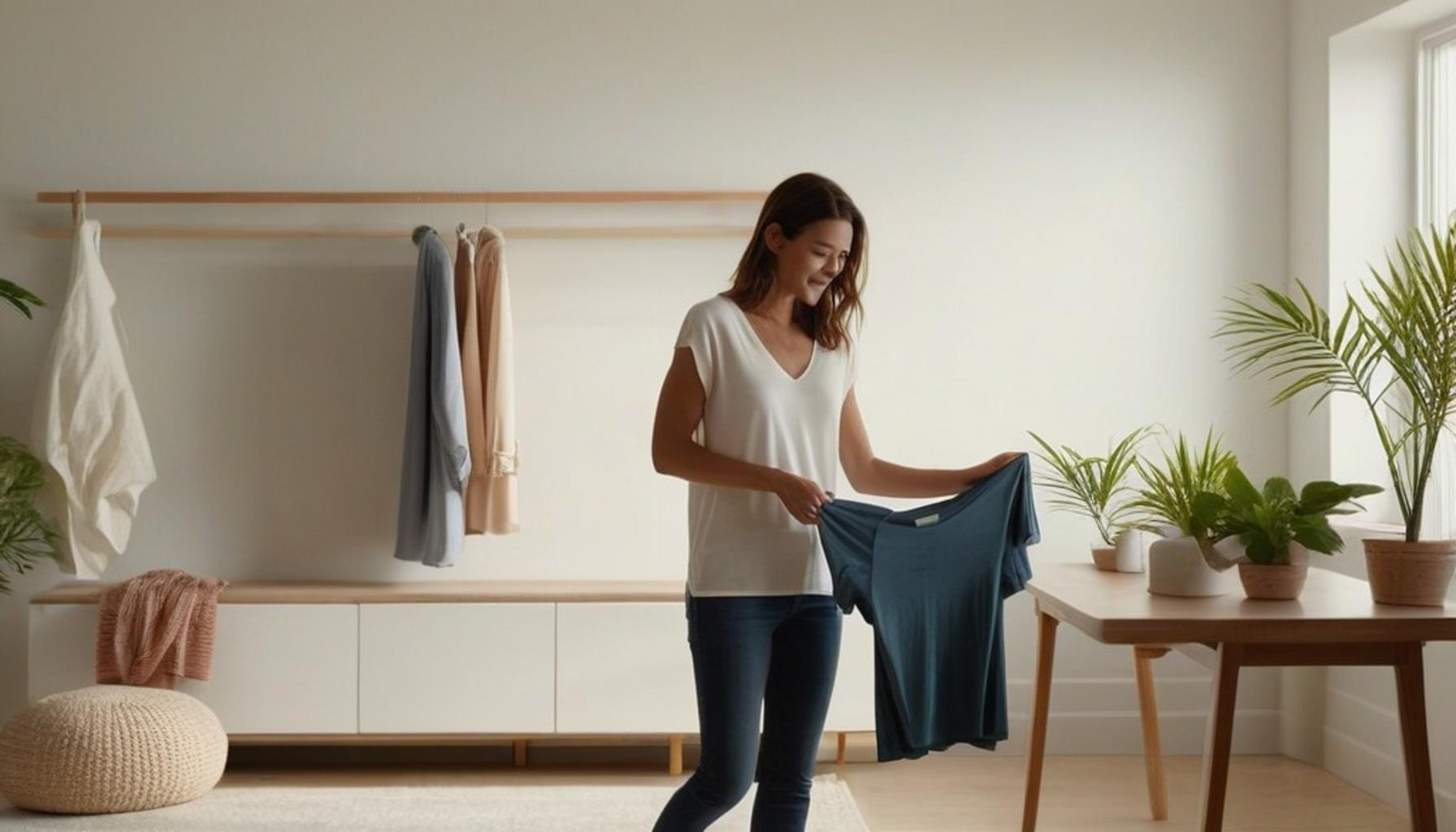
Closets present a particularly stubborn challenge. According to a 2022 report from the American Cleaning Institute, the average American household spends over $1,700 annually on clothing that often goes unworn within twelve months of purchase. This pattern reflects both consumer habits and the sunk cost fallacy discussed previously.
A widely endorsed method among professional organizers is the “hanger flip” technique. At the start of a season, all hangers are turned backward. As garments are worn, the hangers are flipped forward. After three to six months, any clothing still on backward hangers becomes a strong candidate for donation.
- Capsule wardrobes — Limiting closet contents to a curated set of interchangeable pieces reduces daily decision-making and simplifies laundry routines.
- Seasonal rotation — Storing off-season clothing in labeled bins frees up visual and physical space, a core principle of simple living strategies.
- The 90-day rule — If an item hasn’t been touched in three months, it likely isn’t essential to daily life.
Shared Living Spaces and Digital Clutter
Living rooms and home offices often suffer from a different kind of clutter: paperwork, cables, and digital devices. Efficient decluttering methods extend beyond physical objects, encompassing inboxes, desktops, and cloud storage. A 2021 Adobe study found that the average professional spends 28% of their workweek managing emails, many of which stem from unorganized digital filing systems.
Implementing designated “landing zones” for incoming mail, chargers, and shared family items can drastically reduce surface clutter in communal areas. Labeling bins and creating clear storage boundaries for each household member also minimizes the friction that often leads to disorganization in multi-person households.
These targeted, room-specific tactics illustrate that decluttering for efficiency is not a one-size-fits-all endeavor. Instead, it requires adapting core minimalist principles to the unique rhythms and demands of each space within the home.
DISCOVER MORE: Click here to learn more
Bringing It All Together: A Sustainable Path Forward
Across kitchens, closets, and shared living spaces, one theme remains constant: decluttering strategies succeed when they are treated as ongoing habits rather than one-time projects. The households that maintain lasting results are rarely the ones that purge everything in a single weekend. Instead, they build small, repeatable systems that align with how they actually live.
This distinction matters because minimalism, at its core, is not about deprivation. It is about intentionality. Choosing a capsule wardrobe, designating a landing zone for mail, or applying the 90-day rule are not restrictive acts; they are decisions that return time, money, and mental space back to the household.
The data referenced throughout this discussion, from unworn clothing costing families over a thousand dollars annually to the hours lost managing disorganized inboxes, reveals something important. Clutter is rarely just a physical inconvenience. It carries measurable financial and psychological costs that compound over time.
For readers looking to apply these minimalist lifestyle tips, the most practical starting point is simply choosing one zone and committing to a single method consistently. Progress compounds far faster than most anticipate once decision fatigue is removed from the equation.
- Start small, but start consistently, rather than waiting for a “perfect” moment to declutter everything at once.
- Revisit systems seasonally, since home organization techniques that work in January may need adjusting by summer.
- Track results, whether through saved time, saved money, or simply a calmer daily routine.
Ultimately, decluttering for efficiency is less about achieving a picture-perfect home and more about reclaiming control over daily life. As more American households continue exploring simple living strategies, the broader takeaway becomes clear: an organized home is not the end goal, but the byproduct of intentional, sustainable choices made one space at a time.
Frequently Asked Questions
What are some effective decluttering strategies for small living spaces?
For small living spaces, consider implementing the ‘one in, one out’ rule, where you remove one item for every new item you bring in. Use multifunctional furniture to maximize utility, and prioritize vertical storage solutions like shelves and wall hooks to keep floor space clear.
How can I decide what to keep and what to get rid of while decluttering?
To decide what to keep, evaluate each item’s usefulness and emotional value by asking yourself if you have used it in the last year or if it brings you joy. A practical approach is the Marie Kondo method, which encourages keeping only those items that spark joy.
What is the best way to tackle decluttering a large room?
Start by breaking the large room into smaller zones and tackle one zone at a time to make the process less overwhelming. Set a timer for focused sessions and use clear bins to categorize items as you declutter, ensuring that everything has a designated place.
How do I maintain a minimalist lifestyle after decluttering?
To maintain a minimalist lifestyle, establish regular decluttering habits by setting aside time each month to reassess your belongings. Stay mindful of new purchases and adhere to the ‘one in, one out’ rule to keep clutter from accumulating once again.
Can I apply decluttering strategies to digital spaces as well?
Absolutely! Apply decluttering strategies to digital spaces by organizing files into folders, deleting unnecessary emails, and unsubscribing from irrelevant newsletters. Regularly back up important data to keep your digital environment efficient and free from distractions.

Beatriz
Beatriz Johnson is a seasoned minimalist and writer with a passion for simplifying the complexities of personal organization and intentional living. With over a decade of experience in decluttering strategies and mindful consumption, she specializes in topics like space optimization, habit simplification, and sustainable lifestyle choices. Through her work on our website, Beatriz empowers readers to embrace minimalism, reduce mental and physical clutter, and create more meaningful, organized lives in today's fast-paced world.