
Efficient Habits for a Minimalist Lifestyle: Organizing Your Workspace for Enhanced Productivity
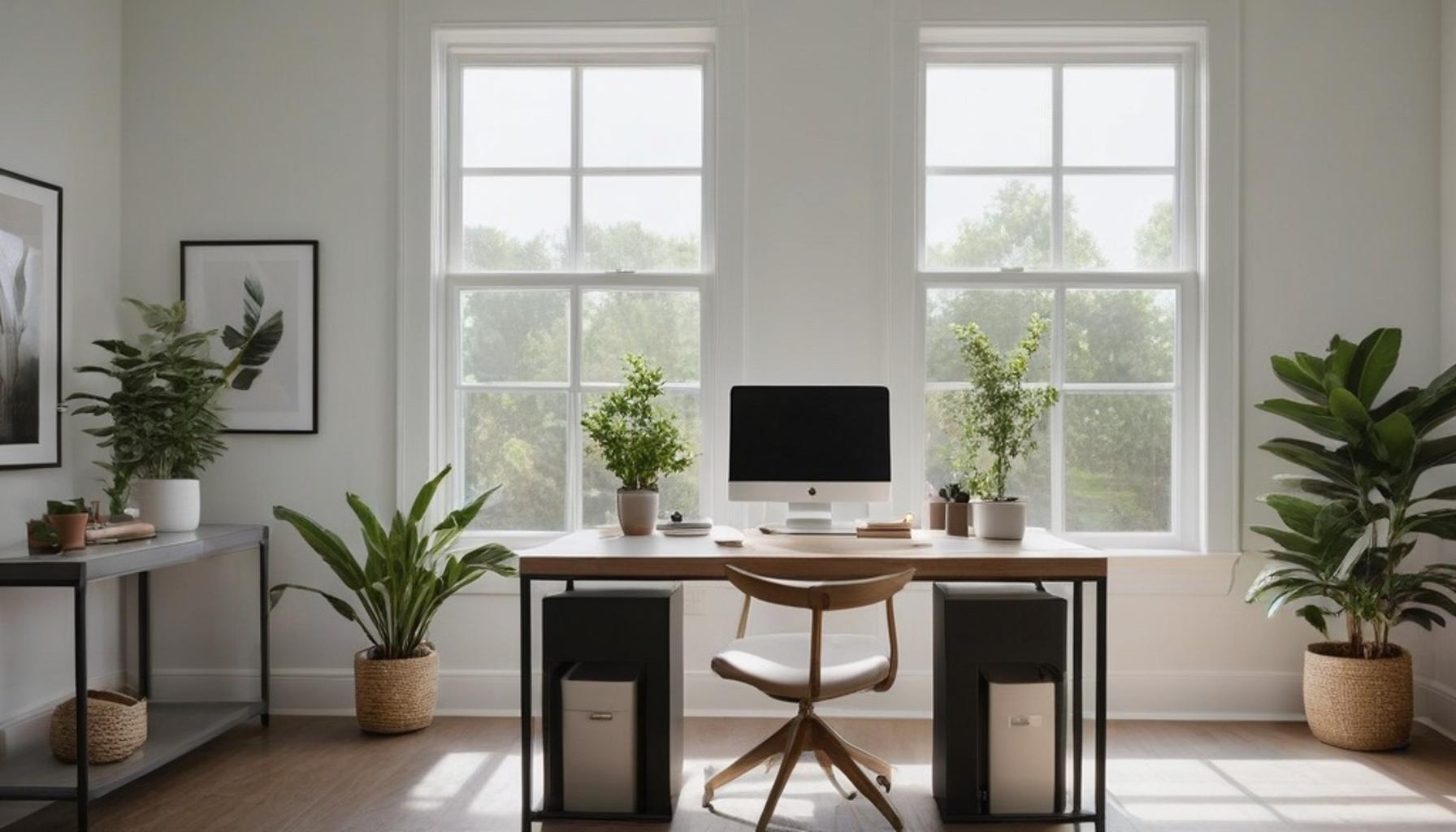
Understanding the Impact of Your Workspace on Productivity
In an era where efficiency is paramount, the statistics surrounding workplace productivity are startling. American professionals lose an average of 4.3 hours per week searching for misplaced items or documents, translating to over 200 hours a year that could otherwise be harnessed for valuable work. This staggering loss underscores the potential benefits of adopting a minimalist lifestyle workspace organization approach, which can help professionals reclaim this otherwise wasted time.
Across a diverse range of work environments, from innovative Seattle tech startups to traditional New York corporate offices, there is a clear trend toward minimizing clutter. More than just an aesthetic choice, this move towards organized, intentional workspaces is demonstrating remarkable effects on productivity and mental clarity. Professionals who embrace a clean workspace often report feeling more in control and less stressed, leading to enhanced performance levels.
The Hidden Cost of Clutter
Research from Princeton University reveals a critical piece of information: visual clutter competes for your brain’s attention, which significantly reduces focus and increases stress levels. Each unnecessary object on your desk serves as a small distraction, collectively burdening your cognitive resources. Each item can act as a small tax on your mental state, sapping your energy and creativity.
Consider the common elements often found in a disorganized workspace:
- Stacks of unread paperwork and old mail, creating an overwhelming sea of documents.
- Tangled cables and unused chargers, which can easily turn into an unsightly mess.
- Duplicate office supplies strewn across different surfaces, leading to confusion and inefficiency.
- Sticky notes with outdated reminders, which may clutter visual space and drift from your priorities.
What This Guide Offers
This guide provides practical strategies for cultivating efficient workspace habits that can transform your cluttered desk into a productivity powerhouse. You will learn specific methods for decluttering your workspace without compromising on functionality or personal flair.
Our exploration will include:
- Simple daily rituals designed to prevent the accumulation of clutter, ensuring your workspace remains organized.
- Smart storage solutions ideal for small home offices, maximizing every inch of your available space.
- Digital organization tactics that seamlessly complement your physical environment, promoting a cohesive workspace.
- Proven minimalist productivity tips employed by industry leaders and top performers to optimize their workflows.
Whether you’re navigating the complexities of remote work or embarking on a daily commute to the office, mastering workspace organization for efficiency could be the vital element you need to enhance your productivity. Join us as we delve into the philosophy of ‘less is more’ and uncover the profound impact of a well-organized workspace on your professional success.
DISCOVER MORE: Click here for additional insights
Embracing Minimalism in Workspace Design
Understanding the underlying philosophy behind minimalist lifestyle workspace organization is crucial before implementing any specific organizational tactics. Contrary to the misconception that minimalism equates to stark or sterile environments, it is, in fact, about a deliberate curation process. Each item on your desk has earned its placement, contributing either through its functional utility or by adding genuine value to your work environment. This selective approach not only fosters a sense of clarity but also enhances productivity by minimizing distractions.
Across the United States, leading interior designers and productivity consultants emphasize the importance of an essential guideline known as the 90-day test. This principle suggests that if an item has not been utilized or hasn’t contributed positively to your workflow within a three-month span, it likely doesn’t deserve a spot in your workspace. This concept encourages individuals to evaluate their belongings critically and promotes a cycle of continuous pruning and refinement, ultimately leading to a workspace that seamlessly aligns with their current needs.
The Three Zones Method
One of the increasingly favored strategies within the realm of minimalist workspace organization is the Three Zones Method. This technique involves categorizing your desk into three distinct functional areas, which adds structure to your workspace and alleviates the ambiguity often associated with where to place various items.
- Active Zone: This area should be within immediate reach and is designated strictly for items you interact with several times a day. This typically includes your laptop, primary notebook, and perhaps a single reliable writing instrument. By centralizing these crucial tools, you create a flow that supports efficiency.
- Reference Zone: Located slightly further away from your immediate workspace, this zone holds items that you need on a less frequent basis. It could include reference documents, books that you consult regularly, or a secondary monitor used for multitasking. Having this area organized yet accessible means you won’t waste time rummaging through piles of paper to find what you need.
- Storage Zone: This category encompasses drawers or shelving units that store supplies and materials required on a weekly or monthly basis. Items like extra paper, office supplies, or archived files can be organized here, ensuring they remain out of sight but within reach should your workload demand it.
The zoning system directly addresses a phenomenon known as “decision fatigue.” When each object possesses a designated home, you alleviate the burden of countless micro-decisions that gradually chip away at your mental energy during the workday. This structured organization style not only enhances clarity but allows for a more productive mindset.
Quality Over Quantity: The Multi-Function Approach
Another significant element in decluttering your workspace is challenging the belief that you need an abundance of tools at your disposal. Minimalist professionals advocate for prioritizing multi-functional items over redundant specialized gadgets. This strategic rethinking leads to a workspace that is not only organized but also more intentional and purposeful.
Consider some practical, modern substitutions that are gaining traction in offices across the country:
- Replacing multiple single-use organizers with one adjustable modular tray system can streamline your desk and allow for easy access to various items without clutter.
- Instead of using bulky desktop calendars, swapping them for digital scheduling integrated directly into your primary device can declutter your workspace while enhancing your scheduling capabilities.
- Consolidating the chaos of five different pens and highlighters into one reliable multi-color pen not only saves space but also reduces the likelihood of dealing with dried-out or misplaced writing instruments.
These small yet impactful shifts accumulate over time, fostering not just a cleaner and more efficient desk but also a more intentional relationship with your work environment. This curated approach sets the perfect stage for developing actionable habits that will enhance productivity and creativity in today’s rapidly evolving workscape.

| Category | Description |
|---|---|
| Decluttering Techniques | Implementing systems like the 4-box method (Keep, Toss, Donate, and Relocate) can facilitate the minimalist lifestyle workspace organization process. |
| Digital Organization | Utilizing tools like cloud storage enhances productivity while minimizing physical clutter, aligning closely with efficient workspace habits. |
| Designated Zones | Creating specific areas for various tasks can streamline workflow; a principle of organizing your workspace helps maintain focus. |
| Time Management Techniques | Methods such as the Pomodoro Technique can pair with minimalist productivity tips for maximizing efficiency without overwhelming the space. |
DISCOVER MORE: Click here to dive deeper
Building Daily Rituals That Sustain a Minimalist Workspace
While decluttering serves as the foundation, the true test of minimalist lifestyle workspace organization lies in the daily rituals that prevent chaos from creeping back in. Research from workplace productivity firms suggests that clutter tends to accumulate at a rate of roughly 15% per week when left unchecked. This means that without consistent habits, even the most meticulously organized desk can revert to disorder within a single month.
Professionals who successfully maintain organized workspaces often point to a handful of practical routines that require minimal effort but yield significant returns in terms of mental clarity and workflow efficiency.
The Two-Minute Reset Rule
One of the most effective efficient workspace habits gaining popularity among productivity experts is the two-minute reset. At the close of each workday, individuals dedicate a brief two-minute window to returning items to their designated zones, discarding unnecessary papers, and wiping down surfaces.
This micro-habit prevents the gradual buildup of clutter that often overwhelms workers by midweek. Unlike a comprehensive weekend cleanup, which can feel like a daunting chore, this daily practice integrates seamlessly into an existing routine and requires negligible time investment.
- Clearing your Active Zone of any papers or tools used that day
- Returning reference materials to their proper location
- Emptying your inbox tray if physical mail or documents have accumulated
The One-In, One-Out Principle
Another cornerstone habit among those practicing minimalist productivity tips is the one-in, one-out principle. This rule dictates that whenever a new item enters your workspace, whether it’s a notebook, gadget, or office supply, an existing item must be removed to make room for it.
This practice, borrowed from minimalist wardrobe philosophies popularized in cities like Portland and Austin, translates surprisingly well to office environments. It forces a continuous evaluation of what truly serves your productivity versus what has simply become a habitual accumulation.
Companies that have implemented similar policies in shared office spaces report a noticeable reduction in supply closet overflow, with some estimating a 30% decrease in unnecessary purchasing over a six-month period.
Digital Decluttering as a Parallel Practice
Organizing your workspace for efficiency extends beyond the physical realm. Desktop backgrounds cluttered with hundreds of icons, overflowing email inboxes, and disorganized file structures create the same cognitive drag as a messy desk.
Adopting a parallel digital minimalism practice, such as maintaining fewer than ten icons on your desktop or archiving emails weekly, complements physical decluttering efforts. Many productivity coaches now recommend treating your digital workspace with the same scrutiny as your physical one, applying the same 90-day evaluation standard to files and applications alike.
This dual approach, addressing both tangible and digital clutter, represents a more holistic take on decluttering your workspace and reflects the increasingly blended nature of modern work environments across American offices and home setups alike.
DISCOVER MORE: Click here for additional insights
The Long-Term Payoff of a Minimalist Workspace Philosophy
Across every strategy discussed, from zone-based desk layouts to the two-minute reset rule, a single truth emerges: minimalist lifestyle workspace organization is not a one-time project but an evolving practice. The most successful adopters treat their desks the way they treat their calendars, subject to regular review, adjustment, and intentional pruning.
What makes this approach compelling is its scalability. Whether you work from a downtown Chicago high-rise, a home office in suburban Denver, or a shared co-working space in Brooklyn, the same principles apply. Fewer physical distractions consistently translate to sharper focus and measurable gains in output.
The data reinforces this. Studies cited earlier revealed clutter can silently erode 15% of workspace order weekly, while consistent habits like the one-in, one-out principle curbed unnecessary purchasing by nearly a third. These figures suggest that small, repeatable actions outperform sporadic, large-scale cleanups.
Looking ahead, the fusion of physical and digital decluttering will likely define the next phase of workplace efficiency. As remote and hybrid arrangements continue reshaping American work culture, applying efficient workspace habits to both tangible desks and digital desktops will become less optional and more essential.
For readers ready to begin, the path forward does not require an overnight overhaul. Consider starting with:
- A single 90-day evaluation of items on your desk
- One week of practicing the two-minute reset
- A trial run of the one-in, one-out principle for new supplies
Ultimately, organizing your workspace reflects a broader mindset shift, one that values clarity over accumulation and intention over habit. Those who commit to this philosophy often discover that workspace organization for efficiency becomes less about the desk itself and more about how clearly they can think, create, and produce within it.
Frequently Asked Questions
What are the first steps to decluttering my workspace for a minimalist lifestyle?
Start by removing all items from your workspace and sorting them into three categories: keep, donate, and discard. Be ruthless with your selections by asking if each item truly adds value to your work. Once sorted, only return the necessary items that align with your productivity goals.
How can I maintain a minimalist lifestyle workspace organization over time?
To maintain organization, establish a daily or weekly cleaning ritual to evaluate your workspace. Regularly review your items and remove anything that no longer serves a clear purpose. Additionally, set boundaries for incoming items to avoid overwhelming clutter.
What tools can I use to enhance my minimalist lifestyle workspace organization?
Utilize simple organizational tools such as drawer dividers, cable management solutions, and desktop organizers that align with a minimalist aesthetic. Choose high-quality items that contribute to your productivity rather than detract from a clean environment. Digital tools like project management apps can also help keep your tasks organized without physical clutter.
How does a minimalist workspace affect my productivity levels?
A minimalist workspace can significantly reduce distractions, allowing for enhanced focus and efficiency. By eliminating clutter, your mind has room to think creatively and concentrate on tasks at hand. Studies suggest that a clean and organized environment can elevate mood and increase overall productivity.
Can I still personalize my workspace while following a minimalist approach?
Yes, personalization is possible in a minimalist workspace by choosing a few meaningful items that reflect your style and motivate you. Opt for decor that is functional or serves a purpose in your work, such as a sleek plant or an inspiring quote framed on the wall. Balance is key, so ensure that these items do not disrupt the clean and organized aesthetic.
What is the role of color in a minimalist lifestyle workspace organization?
Color can play an integral role in a minimalist workspace by creating an environment that promotes calmness and focus. Opt for neutral tones or a monochromatic palette to maintain simplicity, while occasional pops of color can be used strategically to inspire creativity. This thoughtful use of color helps create an inviting and productive atmosphere without excessive visual clutter.

Beatriz
Beatriz Johnson is a seasoned minimalist and writer with a passion for simplifying the complexities of personal organization and intentional living. With over a decade of experience in decluttering strategies and mindful consumption, she specializes in topics like space optimization, habit simplification, and sustainable lifestyle choices. Through her work on our website, Beatriz empowers readers to embrace minimalism, reduce mental and physical clutter, and create more meaningful, organized lives in today's fast-paced world.