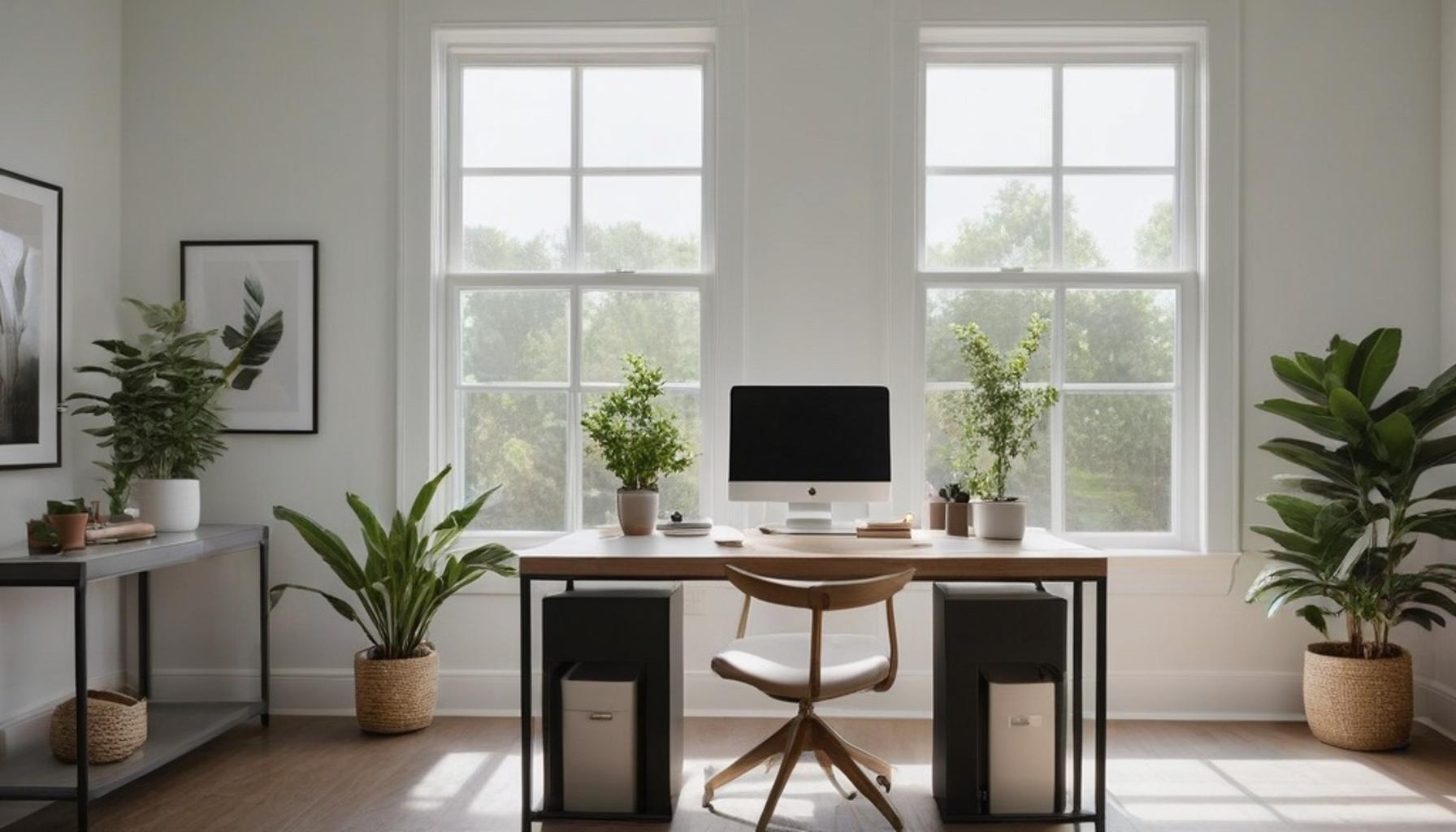
Transforming Your Workspace: Organization Tips for a Productive Minimalist Office
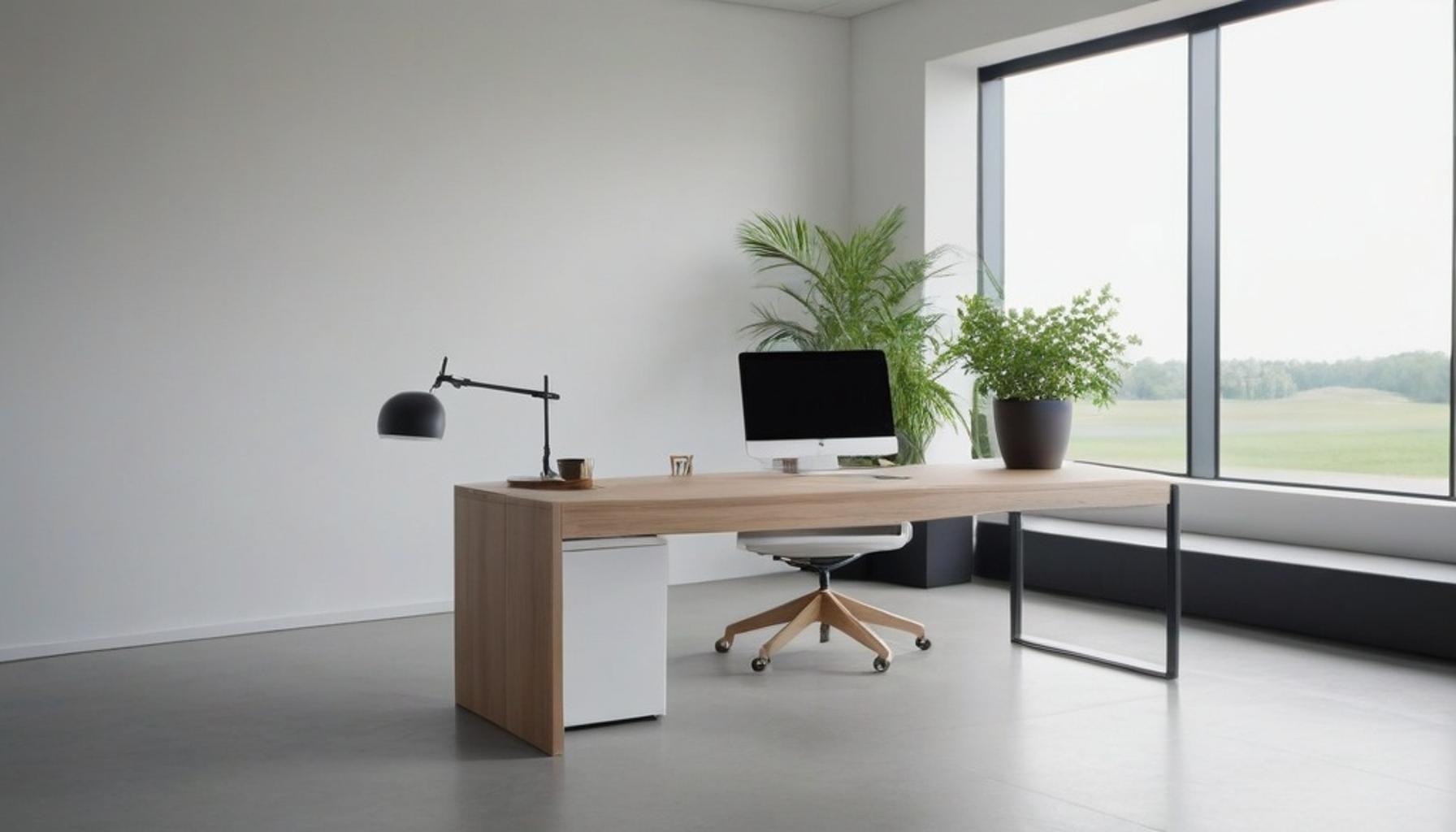
Why Your Desk Might Be Sabotaging Your Focus
Americans spend roughly 1,700 hours a year at their desks, yet the typical workspace is often cluttered with papers, cables, and random knickknacks that quietly drain focus. Studies from Princeton University indicate that visual clutter competes for your brain’s attention, making it significantly harder to concentrate on the task at hand. This reality emphasizes the need for minimalist office organization tips that can transform your workspace into a haven of productivity.
A cluttered desk isn’t just an eyesore; it can have tangible impacts on your effectiveness. Research shows that individuals working in tidy environments experience lower stress levels and are more likely to think clearly when making decisions. For instance, a survey from the online productivity platform, Evernote, revealed that 61% of respondents feel less productive when surrounded by chaos. This data indicates that the organization of your workspace has substantial implications for your overall well-being and output.
The Minimalist Shift: More Than Just Aesthetics
Minimalism in the workplace transcends mere aesthetics—it serves as a strategic approach to workspace organization that prioritizes function over excess. Major companies like Google and Apple are renowned for fostering clean, distraction-free environments that enhance employee output. Google’s headquarters, often referred to as the “Googleplex,” is characterized by its open spaces and minimalist decor that encourage collaboration and creativity. Similarly, Apple’s offices are designed to minimize distractions and promote focus, allowing employees to harness their full potential.
In the same spirit, you can implement these minimalist principles at home or in the office to create a workspace that enhances focus and efficiency. Consider starting with a dedicated decluttering session, removing items that do not serve a purpose or bring value. This not only opens up physical space but also creates mental clarity.
What You’ll Discover in This Guide
- Decluttering your workspace using proven, step-by-step methods that can be easily followed.
- Essential tools for a minimalist office setup that respect your budget, such as simple organizers and desk accessories.
- Smart storage solutions for small or shared spaces to maximize efficiency while keeping things orderly.
- Practical productivity tips for minimalists backed by workplace research to support your journey toward a more focused environment.
- How to maintain order long-term without falling back into clutter, ensuring your workspace remains conducive to creativity and productivity.
Whether you’re navigating a home office in Austin or managing a corporate cubicle in Chicago, these strategies are designed to resonate universally. The first step toward creating a productive office environment involves rethinking what truly belongs on your desk. Are those random knickknacks contributing to your professional objectives, or are they merely distractions?
Ready to reclaim your space and your focus? Let’s delve further into the practical steps that will lead you to a more efficient workspace.
DISCOVER MORE: Click here for additional insights
# The Anatomy of Clutter: Understanding What’s Really on Your DeskBefore diving into solutions, it’s worth examining what actually accumulates on the average American desk. A 2023 workplace study found that office workers touch an average of 36 items daily that have nothing to do with their core tasks—sticky notes, promotional pens, outdated cables, and coffee-stained mugs from three meetings ago.This accumulation happens gradually, which is precisely why it’s so dangerous. You don’t wake up one morning to a disaster zone; instead, clutter creeps in one seemingly harmless item at a time. Understanding this pattern is the first step toward effective decluttering your workspace for good.
The Three Categories of Desk Clutter
Workspace clutter typically falls into three distinct categories, each requiring a different organizational approach:
- Functional overflow – Items you use but store inefficiently, like a tangle of charging cables or an overflowing pen cup.
- Sentimental clutter – Photos, souvenirs, and gifts that hold emotional value but occupy prime workspace real estate.
- Phantom clutter – Items you forgot you even had, from old business cards to expired hand sanitizer.
Identifying which category your clutter falls into helps determine whether an item needs a designated storage spot, a sentimental display shelf away from your primary workspace, or simply the trash bin.
Building Your Minimalist Office Foundation
Creating a productive office environment starts with understanding a simple principle borrowed from professional organizers: every item on your desk should either be used daily or bring measurable value to your work. If it fails both tests, it doesn’t belong within arm’s reach.This philosophy underpins successful minimalist office setup strategies used by productivity consultants across the country, from tech startups in Seattle to law firms in Boston. The goal isn’t sterile emptiness—it’s intentional functionality.
The 24-Hour Rule
One practical technique gaining traction among organizational experts is the 24-hour rule: before adding any new item to your desk, wait a full day. This pause interrupts impulse placement and forces you to consider whether the item genuinely earns its spot.Consider also implementing a weekly five-minute reset at the end of each workday. Research from the University of California found that workers who tidy their space before leaving report 23% higher satisfaction the following morning, likely because they avoid the mental friction of starting their day amid yesterday’s disorder.These foundational habits create the groundwork for the more advanced workspace organization systems we’ll explore next.
EXPLORE MORE: Click here for additional insights
Zone-Based Systems That Actually Work in Practice
Once the foundation is set, the next step in effective workspace organization involves dividing your desk into functional zones rather than treating it as one undefined surface. Professional organizers call this the “zone method,” and it’s borrowed directly from commercial kitchen design, where every inch of counter space serves a specific purpose.
The Four-Zone Desk Layout
Consider splitting your workspace into these distinct areas:
- Primary work zone – The space directly in front of you, reserved exclusively for your current task, keyboard, and mouse.
- Reference zone – A side area for documents or materials needed within the hour, not the week.
- Digital zone – Where chargers, cables, and devices live, ideally corralled in a single drawer or cable box.
- Rotation zone – A small tray for items awaiting a decision, cleared out every Friday without exception.
This structure eliminates the guesswork that leads to clutter creep. When everything has an assigned zone, misplaced items become immediately noticeable rather than blending into visual noise.
Digital Minimalism Deserves Equal Attention
Physical minimalist office organization tips only address half the problem. A 2022 survey by a leading productivity software company found that the average American office worker has over 1,200 unread emails and 340 files scattered across their desktop at any given time.This digital clutter creates the same cognitive drag as a messy desk, even though it’s invisible to coworkers walking by. Applying the same zone principles to your computer, separate active projects, reference materials, and archived files into clearly labeled folders, can reduce the mental energy spent searching for documents by a significant margin.
Simple Digital Habits Worth Adopting
Try implementing a “desktop zero” policy, similar to inbox zero, where nothing lives permanently on your computer’s home screen. Additionally, unsubscribing from just five unnecessary email lists per week compounds quickly, often cutting inbox volume by 30% within two months.
Furniture Choices That Reinforce Minimalism
Creating a productive office isn’t only about what you remove, it’s also about choosing furniture that discourages clutter from returning. Desks with minimal surface area, closed storage rather than open shelving, and vertical organizers instead of horizontal trays all nudge behavior toward tidiness.Companies like Herman Miller and Steelcase have reported growing demand for compact, storage-integrated desks specifically because remote and hybrid workers are prioritizing productivity tips for minimalists when redesigning home offices. This shift reflects a broader recognition that environment shapes behavior far more than willpower alone. # Building a Workspace That Works for YouTransforming a cluttered desk into a functional, minimalist setup isn’t a one-time weekend project, it’s an ongoing practice that evolves alongside your work habits. The strategies outlined throughout this piece, from zone-based layouts to digital decluttering, share a common thread: intentionality beats accumulation every time.
What the Numbers Really Tell Us
Consider this: workers who implement structured minimalist office organization tips report saving an average of 20 to 30 minutes daily that would otherwise be lost searching for misplaced items or navigating digital chaos. Over a five-day workweek, that’s roughly two hours reclaimed, time that adds up to nearly 100 hours annually.That statistic alone should make anyone reconsider the value of a minimalist office setup.
Small Changes, Compounding Results
The beauty of this approach lies in its accessibility. You don’t need a complete office renovation or expensive furniture to see results. Starting with one drawer, one folder, or one zone creates momentum that naturally extends outward.Decluttering your workspace isn’t about achieving a sterile, lifeless environment either. It’s about removing friction so your best ideas have room to surface without distraction competing for attention.
Where to Go From Here
As remote and hybrid work models continue reshaping how Americans define their workspaces, the principles discussed here will likely become even more relevant. Companies and individuals alike are recognizing that creating a productive office isn’t a luxury reserved for design magazines, it’s a practical investment in daily performance.Start small, stay consistent, and treat your workspace as a living system rather than a finished product. The results, both in output and mental clarity, tend to speak for themselves.
Frequently Asked Questions
What are some essential items to keep in a minimalist office?
In a minimalist office, focus on essential items that promote productivity, such as a quality desk, an ergonomic chair, a computer, and a few organizational tools like storage boxes or baskets. Limit personal items to a few inspirational pieces and keep your workspace clutter-free. This will help maintain focus and enhance creativity.
How can I declutter my workspace effectively?
Start by removing all items from your desk and only placing back those you truly need daily. Sort through documents and digital files to eliminate duplicates and outdated materials, utilizing cloud storage when possible. Regularly reassess your workspace to prevent clutter from accumulating again.
What organization strategies can I use for digital files in a minimalist office?
Implement a simple folder structure on your computer with clearly labeled directories for different projects or categories. Utilize tags and color coding for quick identification and consider organizing files by date or priority. Regularly review and delete unnecessary files to maintain digital minimalism.
How can plants contribute to a minimalist office environment?
Plants can enhance a minimalist office by adding a touch of nature and improving air quality without overwhelming the space. Choose low-maintenance plants that require minimal care, like succulents or snake plants, to ensure they complement your minimalist aesthetic. Their presence can boost mood and productivity without adding clutter.

Beatriz
Beatriz Johnson is a seasoned minimalist and writer with a passion for simplifying the complexities of personal organization and intentional living. With over a decade of experience in decluttering strategies and mindful consumption, she specializes in topics like space optimization, habit simplification, and sustainable lifestyle choices. Through her work on our website, Beatriz empowers readers to embrace minimalism, reduce mental and physical clutter, and create more meaningful, organized lives in today's fast-paced world.