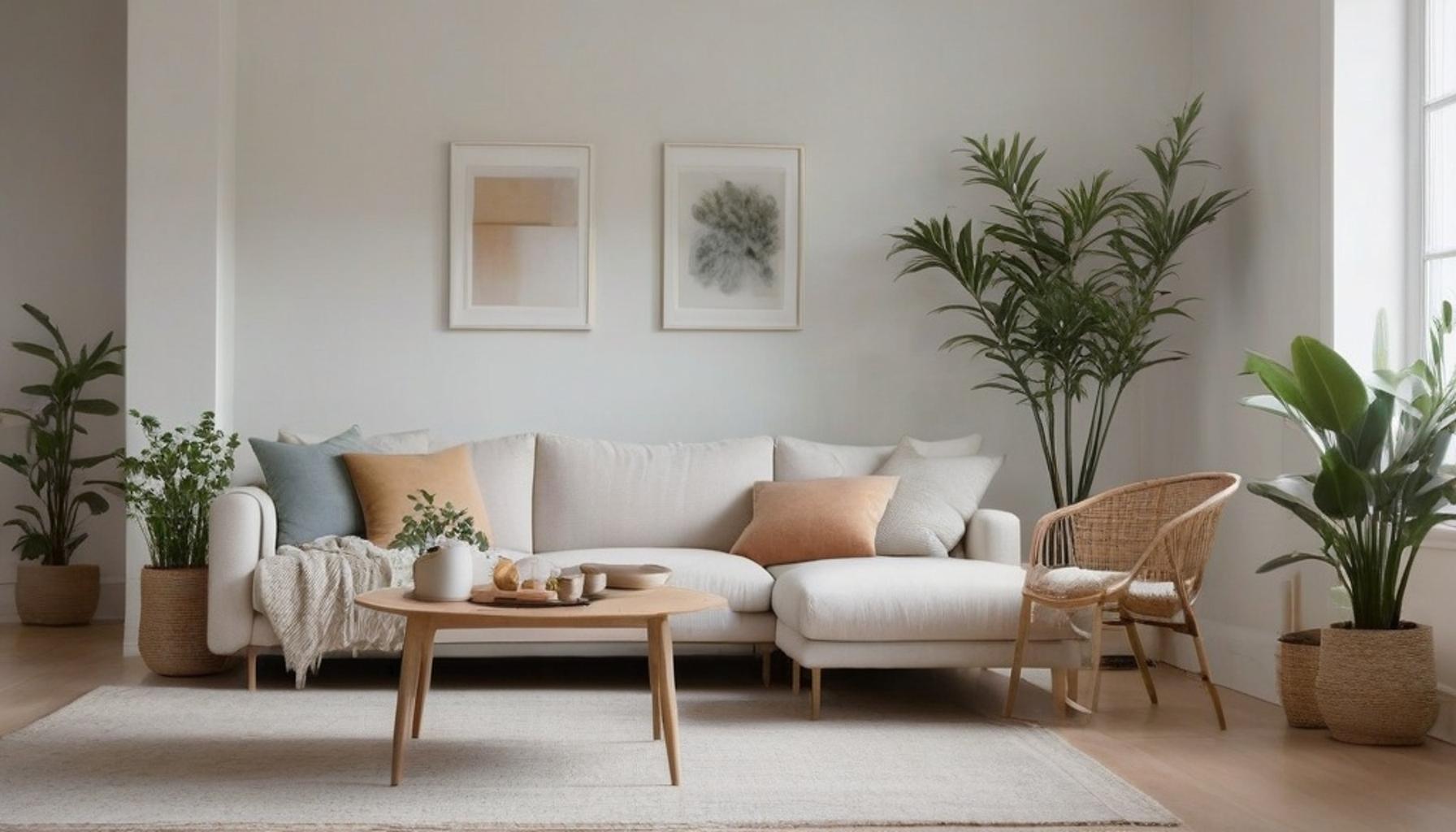
Mindful Consumption: Embracing Minimalism for a Clutter-Free Home
Rethinking What We Own and Why
The average American household contains over 300,000 items. This staggering number not only highlights our consumer-driven culture but also reveals a troubling connection: studies show that clutter is directly linked to higher levels of stress and anxiety. With a relentless cycle of buying, storing, and discarding, many individuals across the United States are beginning to question their habits and reconsider what it truly means to own something. In response to this overwhelming excess, mindful consumption has gained traction as an innovative approach to living.
This isn’t an appeal for a life lived in stark minimalism, void of personal items. Rather, it is about living with intention—prioritizing quality over quantity and understanding the deeper implications of each purchase we make. By fostering an awareness of the true cost of items, from monetary value to environmental impact, consumers can create a more meaningful relationship with their belongings.
Why This Matters Right Now
As the U.S. self-storage industry generates over $40 billion annually, it becomes increasingly clear how much excess we have accumulated in our lives. The boom in self-storage facilities speaks volumes about our attachment to items we often do not need or use. Interestingly, this trend has been mirrored by a significant rise in interest surrounding minimalism tips for home organization. Social media platforms like Pinterest and TikTok are brimming with content dedicated to decluttering and simplifying spaces, captivating millions seeking relief from chaos.
Several interrelated factors are driving this shift in consumer behavior:
- The rising cost of living, which compels families to reassess their spending habits and prioritize essential purchases.
- A growing awareness of the environmental impact that accompanies overconsumption, such as pollution and resource depletion.
- The increasing demand for sustainable consumption habits, particularly among younger generations who value ethical practices.
- A cultural pivot toward valuing experiences over material possessions, exemplified by the boom in travel and unique local activities over shopping sprees.
What This Article Covers
To truly embrace the concept of how to declutter your home, one must understand that effective decluttering requires more than a simple weekend cleaning spree. It requires a fundamental mindset shift, informed daily habits, and a commitment to reconsidering how we engage with our belongings.
In the following sections, readers will uncover the proven benefits of minimalism, including stress reduction, enhanced focus, and improved emotional health. Additionally, they will find actionable mindful living practices that can easily be integrated into everyday life. Step-by-step strategies will also be provided for transforming cluttered spaces into serene and functional homes, paving the way for a more intentional and fulfilling lifestyle.
As society evolves and attitudes toward consumption continue to shift, exploring the principles of mindful consumption offers a promising route toward reclaiming clarity and peace in our everyday environments.
DISCOVER MORE: Click here to learn more
# The Psychology Behind Our Buying Habits
Before diving into minimalism tips for home organization, it’s worth examining why Americans accumulate so much in the first place. Retail psychologists point to a phenomenon called “retail therapy,” where shopping temporarily boosts dopamine levels, creating a cycle that’s difficult to break. This isn’t simply a matter of willpower—it’s a deeply ingrained behavioral pattern reinforced by decades of marketing designed to exploit exactly this response.
Consider this: the average American encounters between 4,000 and 10,000 advertisements daily. Each one is engineered to create a sense of need where none previously existed. Understanding this constant bombardment helps explain why mindful consumption has become less of a lifestyle trend and more of a necessary countermeasure to modern marketing tactics.
The Hidden Costs of Overconsumption
Beyond the obvious financial burden, excessive accumulation carries costs that often go unnoticed until they become overwhelming. Clutter doesn’t just occupy physical space—it consumes mental bandwidth, too. Research from Princeton University’s Neuroscience Institute found that visual clutter competes for attention in the brain, making it genuinely harder to focus and process information.
This connection between physical space and mental clarity is why so many people report feeling immediate relief after decluttering, even before addressing other lifestyle changes. The benefits of minimalism extend far beyond tidier closets; they touch cognitive function, emotional regulation, and even sleep quality.
Several tangible consequences of clutter accumulation have emerged in recent studies:
- Increased cortisol levels in individuals living in visually cluttered environments, according to UCLA research on stress hormones.
- Reduced productivity, as unnecessary items create decision fatigue when searching for what’s actually needed.
- Higher household expenses tied to storage solutions, replacement purchases for misplaced items, and larger living spaces to accommodate excess belongings.
- Strained relationships, particularly among family members with differing tolerances for household clutter.
Learning How to Declutter Your Home with Purpose
Understanding how to declutter your home effectively starts with recognizing that not all possessions carry equal weight—literally or emotionally. A concert ticket stub might hold more value than an expensive gadget rarely used. This is where mindful consumption diverges from generic decluttering advice.
Rather than asking “does this spark joy,” a question popularized by organizing expert Marie Kondo, mindful consumption encourages a broader inquiry: does this item align with how I actually want to live? This subtle shift transforms decluttering from a one-time purge into a sustainable framework for future decisions.

| Category | Description |
|---|---|
| Mindful Consumption | Intentional choices about purchases to prioritize quality and purpose. |
| Clutter Reduction | Eliminating unnecessary items helps create a serene living space. |
| Sustainable Consumption | Focusing on eco-friendly products to support the planet while simplifying life. |
| Emotional Well-Being | A decluttered space can lead to reduced stress and increased happiness. |
EXPLORE MORE: Click here to discover smart storage solutions
# Practical Strategies for Sustainable Living Spaces
Adopting mindful living practices requires more than good intentions—it demands actionable systems that withstand the pull of everyday consumerism. American households generate an average of 4.9 pounds of waste per person daily, according to the Environmental Protection Agency, much of it tied directly to impulsive purchasing habits.
Breaking this cycle starts with structural changes to how we shop, store, and evaluate our belongings. Financial advisors increasingly recommend a 24-hour waiting period before any non-essential purchase over fifty dollars. This simple pause interrupts the dopamine-driven impulse that retailers count on, giving rational thought a chance to catch up with emotional reaction.
Building a Framework for Sustainable Consumption Habits
Developing lasting sustainable consumption habits means shifting from reactive buying to intentional acquisition. This doesn’t mean depriving yourself—it means asking sharper questions before items enter your home.
Consider these practical filters before making a purchase:
- Will this item serve multiple functions, reducing the need for additional purchases down the line?
- Can I identify exactly where this will be stored, or will it become another surface clutter item?
- Am I purchasing this because of genuine need, or because of a sale, trend, or emotional state?
- Does this align with the quality-over-quantity principle, or am I choosing convenience over longevity?
Retailers like IKEA and Target have noted a measurable shift in consumer behavior, with capsule wardrobes and multi-purpose furniture seeing increased demand across the American market. This isn’t a passing fad—it reflects a broader recalibration of what “value” means to today’s shopper.
The Room-by-Room Approach to Lasting Change
One of the most effective minimalism tips for home organization involves tackling spaces incrementally rather than attempting a whole-house overhaul in a single weekend. Professional organizers report that this room-by-room method produces significantly better long-term results, since it prevents the burnout that often derails ambitious decluttering projects.
Start with high-traffic areas like kitchens and entryways, where clutter accumulates fastest and visibility of progress boosts motivation. Bedrooms and closets, often emotionally charged spaces tied to identity and memory, typically work best when addressed last.
The National Association of Productivity and Organizing Professionals notes that households implementing gradual, sustained changes maintain organized spaces at nearly triple the rate of those who attempt rapid, one-time purges. This data reinforces a central truth about mindful consumption: it’s less about a single event and more about rebuilding daily habits that naturally resist accumulation over time.
Rethinking Our Relationship With Stuff
The journey toward mindful consumption isn’t about chasing an aesthetic of bare shelves and white walls. It’s about recognizing that every purchase carries a hidden cost—in storage space, mental bandwidth, and long-term environmental impact. American consumers spend an estimated $18 billion annually on items they never use, a statistic that speaks less to carelessness and more to a system designed to encourage overconsumption.
What separates lasting change from short-lived motivation is structure. The waiting periods, purchase filters, and room-by-room strategies outlined throughout this piece aren’t quick fixes—they’re the scaffolding for a fundamentally different relationship with material goods.
The Benefits of Minimalism Extend Beyond Tidy Rooms
The benefits of minimalism reach far past organized closets. Households that embrace intentional consumption often report reduced financial stress, more disposable income redirected toward experiences, and a measurable drop in the anxiety tied to cluttered environments. Researchers at UCLA have even linked cluttered homes to elevated cortisol levels, particularly among women managing household responsibilities.
Understanding how to declutter your home is ultimately less about the physical act of discarding and more about building awareness—recognizing why certain items entered your life in the first place.
As retailers continue innovating around multi-functional design and consumers grow more skeptical of disposable trends, this shift shows no signs of slowing. The real question isn’t whether minimalism is a passing movement, but how deeply it will reshape American consumption patterns in the decade ahead.
Frequently Asked Questions
How can I start practicing mindful consumption in my daily life?
To begin practicing mindful consumption, assess your current habits by taking note of what you buy and why. Prioritize purchasing items that serve a specific purpose or bring you joy, while resisting impulse buys. It may help to create a spending plan that aligns with your values, encouraging thoughtful purchases.
What are some effective strategies for decluttering my home while adopting minimalism?
An effective strategy is to use the ‘one-in, one-out’ rule, where you remove one item for every new item you bring in. You can also tackle decluttering room by room, setting aside specific times to sort through belongings and deciding what to keep, donate, or discard. Focus on keeping items that enhance your life.
Can mindful consumption help reduce my environmental impact?
Absolutely, mindful consumption encourages you to make intentional purchasing decisions that prioritize sustainable and eco-friendly products. By reducing waste and choosing high-quality items that last, you minimize your carbon footprint and contribute to a healthier planet. This approach promotes a cycle of environmental responsibility.
What types of products should I focus on when practicing mindful consumption?
Focus on products that are durable, versatile, and made from sustainable materials. Prioritize essentials that fulfill your needs without excess, such as multi-functional tools or clothing that can be worn in different settings. This way, you can reduce clutter while emphasizing quality over quantity.
How does mindful consumption affect my mental well-being?
Mindful consumption can significantly enhance your mental well-being by reducing feelings of overwhelm and stress associated with clutter. It promotes a sense of control and intentionality in your life, leading to greater satisfaction and fulfillment. By cultivating a clutter-free environment, you create space for clearer thinking and relaxation.
What are some common challenges people face when trying to embrace minimalism?
Common challenges include emotional attachment to items, difficulty making decisions about what to keep, and societal pressures to purchase more. Overcoming these challenges requires patience and reflection on your values and priorities. Seeking support from minimalism communities or resources can also provide encouragement and strategies to stay committed.

Beatriz
Beatriz Johnson is a seasoned minimalist and writer with a passion for simplifying the complexities of personal organization and intentional living. With over a decade of experience in decluttering strategies and mindful consumption, she specializes in topics like space optimization, habit simplification, and sustainable lifestyle choices. Through her work on our website, Beatriz empowers readers to embrace minimalism, reduce mental and physical clutter, and create more meaningful, organized lives in today's fast-paced world.